Sex in medieval monasteries
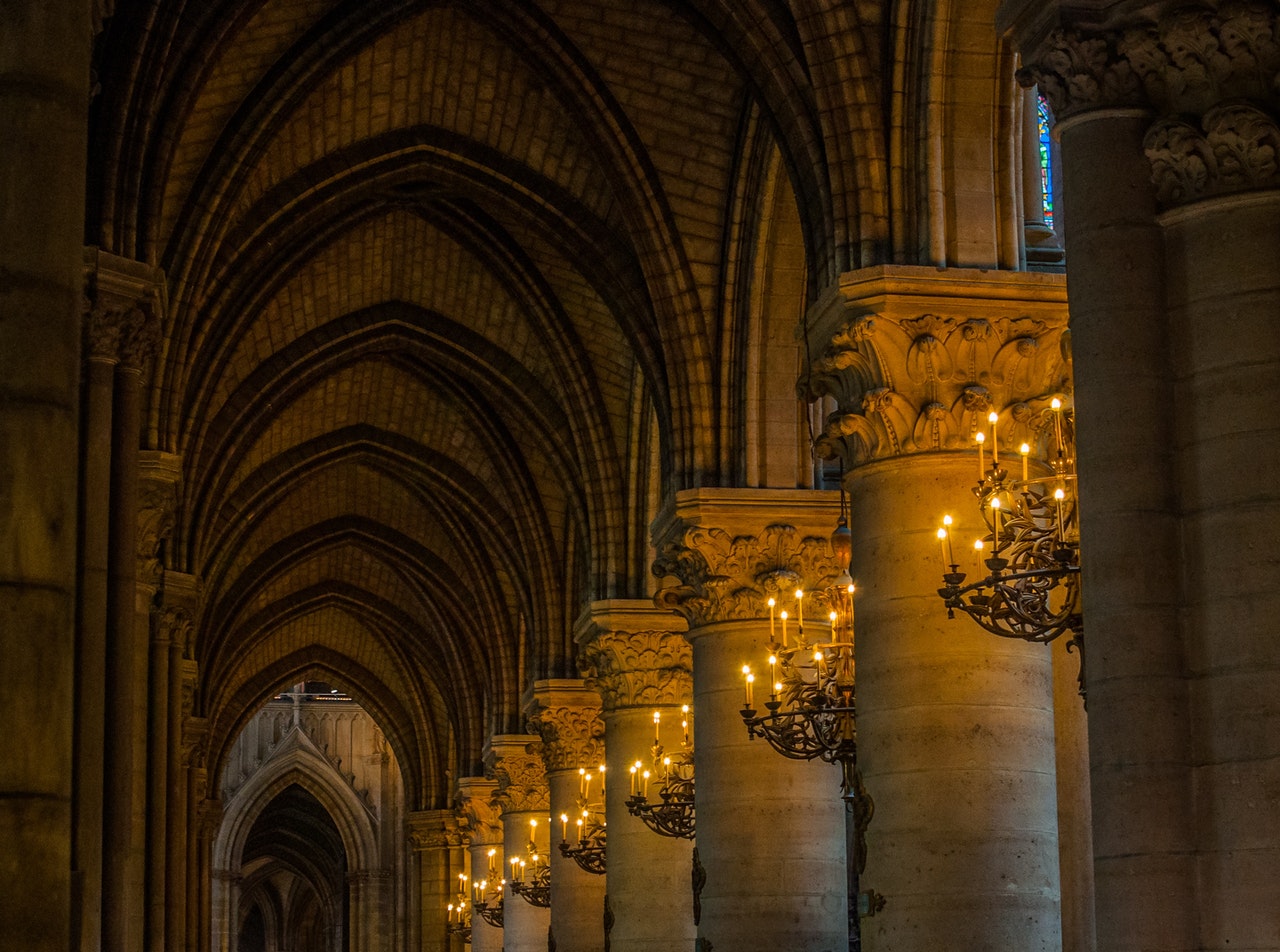
Despite what we all have been taught about the medieval Dark Ages, the Old World of Europe was not as repressed and closeted as one might think, although the Catholic Church does play a significant role in that reputation. Sexuality has a way of coming out. It has to, as humans are sexual beings, and we must express our sexuality. The priests, nuns, monks, and the many others who resided in monasteries had to express themselves in one way or another. Despite what American Christianity has taught us, you cannot merely pray your sexuality away. In this article, we will discover a few sexual beliefs and how celibacy was handled in monasteries, as well as an unusual sexual disease that was around during the medieval times.
Life in the monastery
The Catholic Church regarded celibacy as the purest form of devotion to Christ, and those who actively practiced it were considered to be the holiest followers. They were guaranteed a place in heaven. Of course, we know that those who lived in monasteries took vows of celibacy. The man or woman who took the vow could never get married. Their life now belongs to God. Notice how it is a vow of celibacy, not the vow of chastity. Chastity means that you were to refrain from all sex until you were married, and you can only have sex with your spouse. Celibacy is the vow of never partaking in any sexual encounters for the rest of your life, even if you did get married. But the lure of the opposite sex never truly goes away. This is why many of the early catholic churches were separated by gender.
Bad monks
Many pieces of evidence suggest that the men who lived in the monastery were no less sinful than the drunkards who hung around by brothels and gambling houses.
No matter what religion or sect a man was dedicated to, ultimately, humans are humans, and there are some religious rules in monasteries that were too hard for some men to uphold. Drinking was one of those rules. It was not uncommon for some men inside the monastery to go into the local town and drink themselves into a stupor. But alcohol was often brewed in monasteries as well. Remember that there was no clean water back, so nuns and monks had to brew their water and create a light beer to have clean water to drink. Many Churches and monasteries also created wine when the springtime brought the weather for grapes. This brewing gave clergy easy access to alcohol.
And of course, some women lived in the monastery. Alcohol and forbidden women are never a good mix, even to a clergyman. There are many stories about nuns becoming pregnant, and the clergymen had to be hunted down and made to confess.
Women in the monastery
First, we know that many women did not join monasteries because they chose to. They were forced to by their families who can no longer feed them. Maybe their relatives wanted to keep them from getting an inheritance, or they vowed one of their children to the monastery before they were born. We know that when a nun that was herself to the order, she takes Jesus Christ to be her spiritual husband.
Sexual diseases and ‘Buildup.’
It was common for medieval doctors to diagnose some patients as having too much sex. Too much sex was seen as a disease, even if no STDs were contracted from their dalliances. This was primarily a male disease, and many types of cool food, like lily pad water and lentils, were recommended because these foods were thought to draw heat out of the body.
Too little sex was also seen as a disease, which also primarily affected men. Having very little sex meant that semen could become backed up in your body, and your heart and organs would become damaged.
So, those in monasteries took a lifelong vow of celibacy, but too little sex was thought of as unhealthy and could cause a disease that could kill you. So then, how did a person in the monastery keep themselves from dying?
Now you may be thinking that the nuns and bishops just masturbated, and doing so would quickly solve the problem. But the Catholic Church greatly disapproved of masturbation. If you were reduced to masturbation, even if no one knew what you had done, you had to be punished. The punishment of a member of the clergy masturbating would be at least 30 days of fasting.
Bishops, monks, and priests who became sick were advised by their doctors to sleep with a woman and repent their sins to live, or else they would die. Some of them did break their vow and did sleep with a prostitute. Many didn’t and tried the various food remedies that their doctors gave them
Women could also be diagnosed as suffering from too little sex. The medicine during that time said that women also had seed, and it needed to be expelled. If a women’s seeds were not expelled, then it could back up into her womb. This would cause shortness of breath and fainting. There were several ways they could combat their sexual illness, just like the bishops and priests—one prescribed way to was be masturbated by an official or midwife. The woman herself was not allowed to masturbate her own body.
Note: we often think of the Middle Ages as a time of the chastity belt, as it was a time of extreme sexual repression. But this would not be historically accurate. The chastity belt was created 19th century as an anti-masturbating device.
Conclusion
Now that you have reviewed this article, you probably consider the medieval world and its take on sexuality a lot less repressed than you once thought. The Catholic Church did have many rules around sex and expressing sexuality, but in the end, a human being must release their sexual tendencies and frustrations. If you were an ordinary person and no one of high standing, then you could get married and have sex with your spouse. But if you had to take a vow of celibacy and live in monasteries, then you had to get creative and find special reasons to bend the rules.